Handling Late Agency Payments: 7 Proven Strategies
2 August 2026 · 4 min read
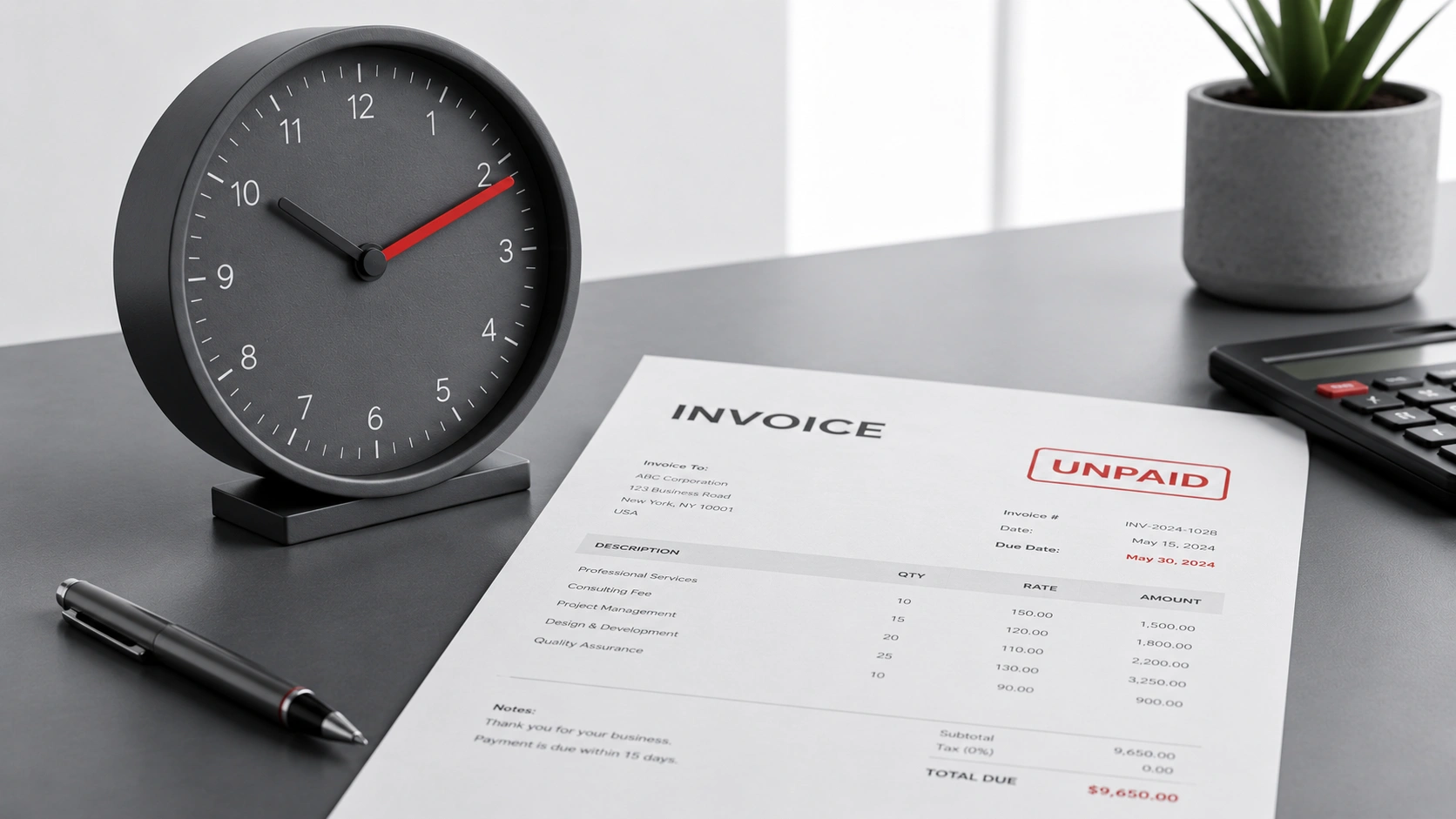
When enterprise clients delay payment, your payroll is at risk. Learn the exact escalation strategies for handling late agency payments and protecting your cash flow.
Handling Late Agency Payments: 7 Proven Strategies
When running a B2B service business, Handling Late Agency Payments is one of the most stressful operational challenges you will face. When a major enterprise client delays a $50,000 invoice, it can threaten your ability to make payroll and pay your software vendors.
What is the best way to handle late agency payments? The best way of handling late agency payments is to establish strict Net 30 terms in your MSA, automate polite follow-ups three days before the due date, immediately pause all ongoing work when an invoice goes 14 days past due, and issue a formal demand letter if the client stops responding.
In this comprehensive guide, we will break down the exact escalation path your account management team should take when an invoice is ignored.
Why Handling Late Agency Payments Requires a System
Many creative and development agencies hesitate to chase unpaid invoices because they fear ruining the client relationship. However, professional businesses respect boundaries. If a client is consistently late, they are treating your agency like a free line of credit. Having a standardized operating procedure removes the emotion from the situation.
Here are seven proven strategies for dealing with overdue accounts.
1. Set Up Automated Payment Reminders
The first line of defense in Handling Late Agency Payments is automation. Set your accounting software (like Xero or QuickBooks) to automatically send a gentle reminder three days before an invoice is due, and another on the exact due date. Often, an enterprise accounting department simply misplaced the invoice, and an automated ping resolves the issue instantly.
2. Enforce Late Payment Penalties
Your Master Service Agreement (MSA) must include a late fee clause. Typically, agencies charge a 1.5% to 5% monthly interest fee on overdue balances. When you follow up on a late invoice, remind the client that the late fee will be applied if the invoice is not settled by the end of the week. This incentivizes procurement teams to prioritize your payout.
3. Pause All Ongoing Work (The Stop-Work Clause)
If an invoice reaches 14 days past due, you must stop working. Inform the client that, per your MSA, all active campaigns, development sprints, or design work are paused until the account is brought current. Never continue delivering value to a client who refuses to pay for past deliverables.
4. Escalate Past the Main Point of Contact
Sometimes, your main point of contact (like a Marketing Director) is too embarrassed to admit their company has cash flow issues, so they ghost you. When Handling Late Agency Payments from corporate clients, bypass the director and email the Accounts Payable (AP) department or the CFO directly.
5. Send a Formal Demand Letter
If a month passes and communication breaks down, it is time to involve legal pressure. A formal demand letter on your law firm's letterhead outlines the exact debt, the accrued late fees, and a final deadline before formal legal action or collections begin.
6. Utilize a B2B Collections Agency
For significant debts that remain unpaid after 90 days, hire a B2B commercial collections agency. While they take a percentage of the recovered funds, having a professional firm chase the debt allows your team to get back to focusing on profitable, paying clients.
7. Report Them to the Agency Community
If an enterprise client completely defaults, you have a duty to warn the rest of the industry. Report the business on a public registry like Defaulter List to prevent them from scamming another agency.
Frequently Asked Questions (FAQ)
How do I write a late payment email to a client?
Keep it brief and professional. State the invoice number, the original due date, the total amount owed, and attach a copy of the invoice. Ask them to confirm when the transfer will be processed.
Can an agency charge interest on late payments?
Yes, as long as the interest rate is explicitly agreed upon in your signed Master Service Agreement (MSA) and falls within your local jurisdiction's legal limits for commercial debt.
What is the most common cause of late agency payments?
The most common cause is a disorganized Accounts Payable department at the client's company, followed closely by clients who intentionally delay vendor payments to artificially boost their own cash flow.